
Imagine this: your procurement team finds a new supplier for low-iron solar glass. The datasheets look fantastic, promising a 2.5% power gain from a state-of-the-art anti-reflective (AR) coating, and the price is competitive. You sign the deal, integrate the glass into your BOM, and ramp up production.
A few months later, field performance reports come in. The power output is lower than expected. Worse, some customers are reporting visual defects. The promised 2.5% gain has vanished, and your brand’s reputation is on the line. What went wrong?
The answer often lies in a simple but overlooked fact: a component’s spec sheet is a promise, but its real-world performance is the truth. For solar glass, that truth is forged in the heat and pressure of the lamination process.
What is an Anti-Reflective (AR) Coating and Why Does It Matter?
Think of an AR coating as the unsung hero of a solar module. It’s an ultra-thin, transparent layer applied to the glass surface that reduces reflection, allowing more photons to reach the solar cells.
The impact is significant. A high-quality AR coating can boost a module’s power output by 2-4%. For a utility-scale solar farm, this translates to millions of dollars in extra revenue over the project’s lifetime. But this crucial benefit hinges on one thing: the coating’s durability.
The Lamination Gauntlet: Will Your AR Coating Survive?
The lamination process is where a solar module truly comes to life. A sandwich of glass, encapsulant, cells, and backsheet is fused together under intense heat and pressure. While essential for creating a durable, weatherproof module, this process is a brutal test for the delicate AR coating.
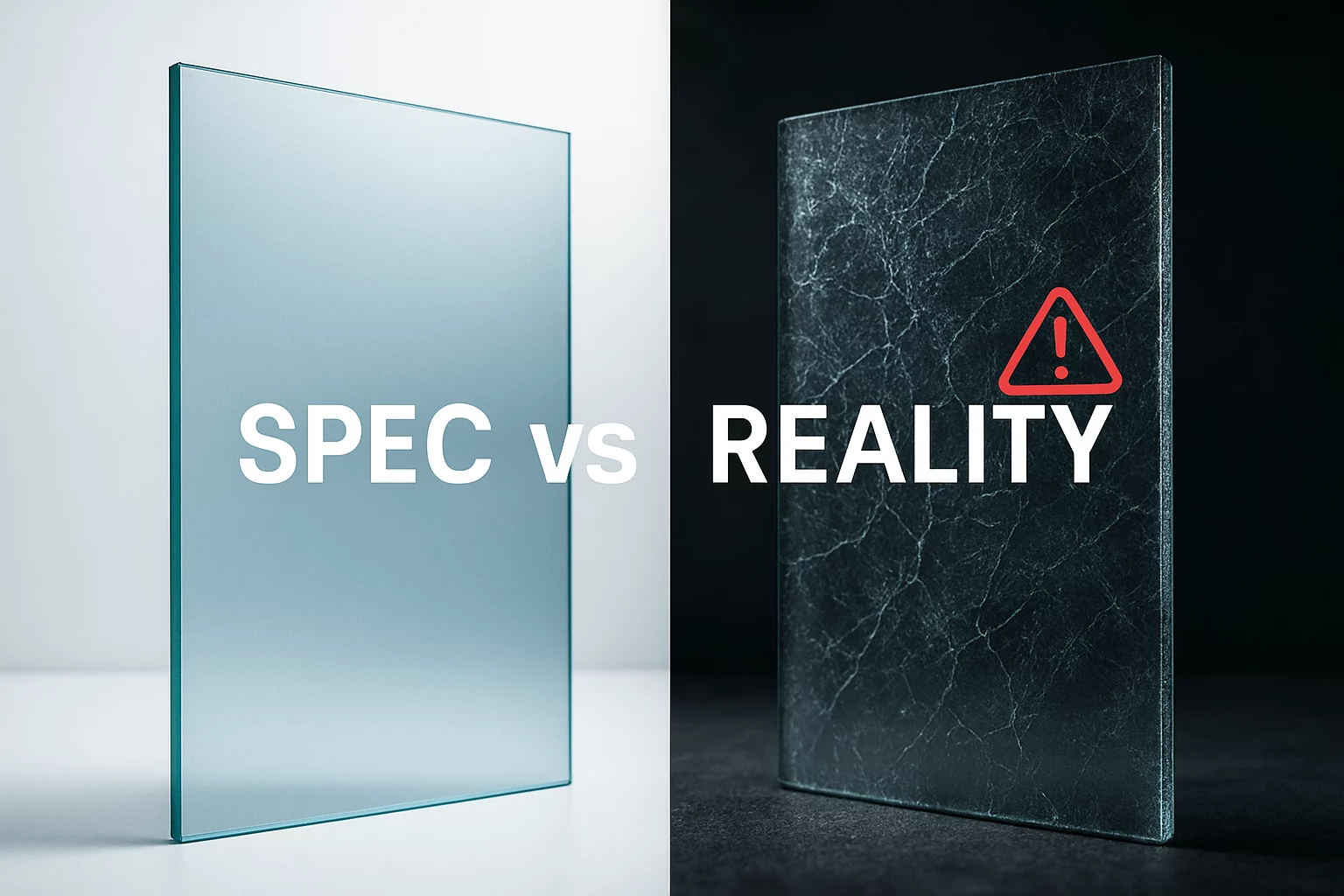
Here’s the problem: not all AR coatings are created equal. Some can degrade, delaminate, or lose their anti-reflective properties under the heat and pressure of lamination. This failure isn’t a minor defect; it can trigger a cascade of problems:
- Immediate Power Loss: The primary benefit of the coating is lost, impacting the module’s nameplate power rating.
- Delamination: A compromised coating can interfere with the bond between the glass and the encapsulant, creating bubbles or separation over time.
- Increased Risk of PID: Some studies suggest that certain types of coating degradation can create pathways for moisture ingress, accelerating Potential Induced Degradation (PID) and causing severe long-term power loss.
Simply trusting a supplier’s datasheet is a gamble. The only way to know for sure is to test the glass within your specific production process.
How to Verify AR Coating Integrity Post-Lamination
Verifying the coating is a two-step process: a simple visual check followed by a definitive performance measurement.
-
Visual Inspection: After lamination, carefully inspect the glass surface under good lighting. Look for any signs of haziness, discoloration, or peeling. A robust coating will appear just as clear and uniform as it did before lamination.
-
The Flasher Test: The ultimate proof is in the power output. A flasher test, which measures the module’s performance under Standard Test Conditions (STC), is the definitive way to quantify the power gain from the AR coating. By building two otherwise identical modules—one with the new supplier’s glass and one with your current, proven glass—you can directly compare their power output. This A/B test removes all guesswork.
A comprehensive solar module prototyping phase is essential for this validation. It allows you to create a small batch of test modules to confirm, with hard data, that the promised gains materialize after your lamination cycle.
Beyond the Coating: Is Your Glass Mechanically Sound?
The AR coating is only half the story. The glass itself is a critical structural component of the module, protecting the cells from hail, wind, and snow loads.
However, the journey from the glass factory to your production line is fraught with peril. Tiny, invisible micro-cracks can form during transport and handling. While insignificant on their own, these cracks can become failure points when the module is put under stress.
Putting Glass to the Test: Simulating Real-World Stress
To ensure a module’s long-term durability, it must undergo mechanical load testing. The industry standard, IEC 61215, requires modules to withstand a uniform load of 2400 Pascals (Pa). This is equivalent to the pressure exerted by strong winds or a heavy layer of snow.
This isn’t just a final check; it’s a core part of lamination trials and material testing for any new component, especially one as fundamental as glass.
„The spec sheet tells you what the glass ’should‘ do,“ notes Patrick Thoma, a PV Process Specialist at J.v.G. Technology. „A mechanical load test tells you what it ‚will‘ do after being integrated into your module design and subjected to real-world stress.“
Failing this test means the glass is not robust enough for the field, posing a massive risk to product reliability and warranty claims.
De-Risking Your Supply Chain: A Simple Framework for Qualification
Qualifying a new glass supplier doesn’t have to be complicated. By focusing on performance rather than just specifications, you can protect your product quality and avoid costly mistakes.
Here’s a simple, four-step framework:
- Establish a Baseline: Build and flash a control module using your current, trusted glass supplier to get a baseline power output.
- Prototype with the New Glass: Using the exact same BOM and process parameters, build an identical module with the new supplier’s glass.
- Validate Performance: Flash the new module. Does the power gain meet or exceed the supplier’s claims when compared to your baseline?
- Stress Test for Durability: Subject the new prototype to a standard mechanical load test (e.g., 2400 Pa). Check for any cracks, breakages, or post-test power loss.
This data-driven approach moves you from hoping the new glass is good enough to knowing it is.
Frequently Asked Questions (FAQ)
What is low-iron solar glass?
It’s a type of high-transparency glass with very low iron content. Iron absorbs light, so removing it allows more sunlight to pass through to the solar cells, increasing efficiency. It’s the standard for modern, high-performance solar modules.
Can’t I just trust the supplier’s datasheet?
A datasheet is an excellent starting point, but it represents the component’s performance in a lab, not necessarily in your unique production environment. The heat and pressure of lamination can alter a material’s properties. The best practice is to „trust but verify.“
What’s the difference between patterned and float glass for solar?
Patterned glass has a textured surface designed to scatter incoming light, reducing reflection and trapping more light within the module. It’s most commonly used for the front glass. Float glass is perfectly flat and is often used for the rear side of bifacial modules.
Isn’t this kind of testing expensive?
The cost of qualifying a component is minimal compared to the cost of a mass production failure, product recall, or warranty claims. Using a shared facility, like a full-service solar module R&D production line, makes industrial-grade testing accessible and cost-effective without the need for major capital investment.
Your Next Step: From Uncertainty to Confidence
Switching or adding a new supplier for a critical component like solar glass introduces risk. But by implementing a structured qualification process focused on real-world performance, you can turn that risk into a competitive advantage.
Validating AR coating survival through flasher tests and confirming mechanical strength through load testing are not just quality control steps; they are essential safeguards for your investment, your product’s performance, and your customers‘ trust.
Ready to learn more about how industrial-scale testing can validate your components? Explore how an applied research environment can provide the data you need to make engineering decisions with confidence.